Laureate of The Palestine Prize for Art 2025
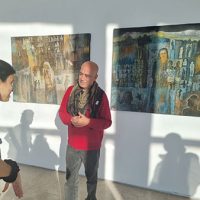
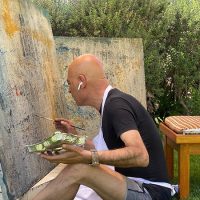

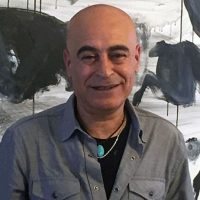
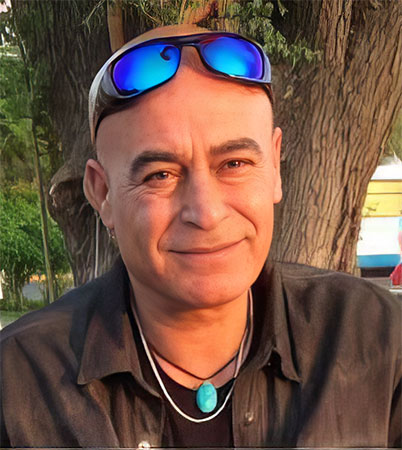
Tayseer Barakat
Date of Birth: 1957
Place of Birth: Jabalia refugee camp, Gaza Strip
Art is not merely an image on a wall, but the memory of a people resisting oblivion, opening the door of hope for generations yet unborn.”
—Tayseer Barakat
Tayseer Barakat is a prominent figure in contemporary Palestinian art. He was born in 1959 in Jabaliya refugee camp in the Gaza Strip, to a family originally from the historic Palestinian town of al-Majdal (today Ashkelon), from which they were displaced during the Nakba of 1948.
Growing up in the refugee camp environment profoundly shaped Barakat’s artistic consciousness. The realities of displacement, cultural survival, and the struggle to preserve historical memory became formative elements in his worldview and later emerged as central themes in his artistic work.
From an early age, Barakat showed a strong interest in drawing and visual expression. His artistic sensibility developed within the social and political landscape of Gaza, where art often functioned as both a personal expression and a cultural act of resilience.
Today, Barakat’s work reflects the layered history of Palestine and the lived experience of Palestinians under colonization, while engaging broader universal themes of memory, loss, endurance, and identity.
Tayseer Barakat pursued his formal art education in Alexandria, Egypt, where he studied painting at the Faculty of Fine Arts and earned his Bachelor of Fine Arts degree in 1983.
Studying in Alexandria exposed Barakat to a rich artistic environment shaped by Arab, Mediterranean, and international artistic traditions. This period allowed him to deepen his technical skills in painting while also engaging with broader art historical ideas that would later influence his artistic language.
After completing his studies, Barakat returned to Palestine and began working as an art educator, teaching at a UNRWA Women’s Teacher Training Center in Ramallah. His work as a teacher helped foster artistic development among younger generations while allowing him to remain actively engaged in the cultural life of Palestinian society.
The combination of formal academic training and his subsequent return to Palestine played an important role in shaping Barakat’s artistic vision—one that bridges technical mastery, historical awareness, and a deep connection to the cultural landscape of Palestine.
For more than four decades, Tayseer Barakat has developed a distinctive artistic language that combines painting, drawing, collage, mixed media, and experimental material practices. His work often explores the relationship between history, land, memory, and identity, drawing inspiration from Palestinian historical experience, ancient regional artistic traditions, and the cultural landscapes of Palestine.
During the early years of his career, Barakat became actively involved in developing Palestinian cultural institutions. Between 1984 and 1996, he worked as an art teacher at the Women’s Training Centre in Ramallah. In 1984, he was a founding member of the League of Palestinian Artists. In 1992, he became a founding member of Al Wasiti Art Centre in Jerusalem; in 2002, a founding member of Al Hallaj Art Centre in Ramallah; and in 2006, a founding member of the International Art Academy in Ramallah. All of these institutions were established to support Palestinian artists, promote artistic exchange, and strengthen the role of visual arts within Palestinian cultural life.
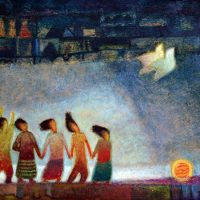
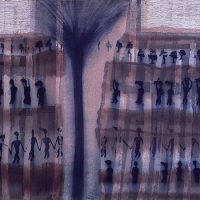
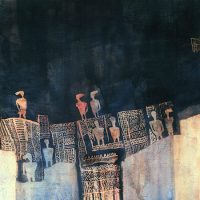
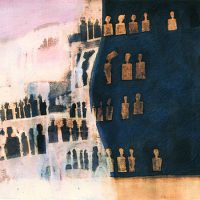
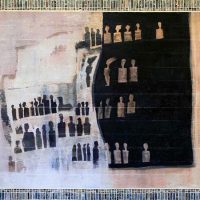
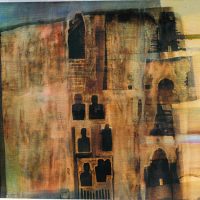
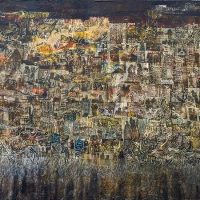
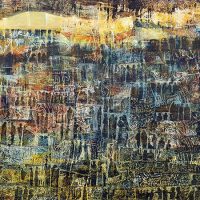
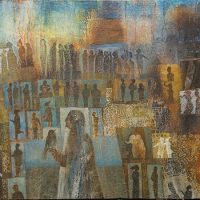
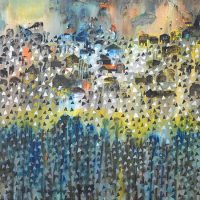
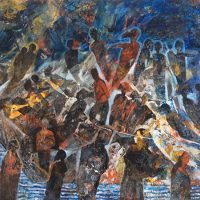
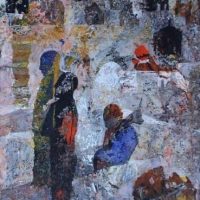
Barakat’s compositions frequently employ earthy palettes and textured surfaces that evoke the material and emotional landscapes of the region. Moving between abstraction and symbolic imagery, his works suggest fragments of memory, archaeological traces, and the persistence of cultural identity.
The New Vision Movement
A significant turning point in Barakat’s artistic development came during the First Palestinian Intifada (1987–1993). At that time, Israeli authorities imposed severe restrictions on the importation of art materials into the occupied Palestinian territories, limiting access to supplies such as oil paints, canvas, and other professional art materials. At the same time, the uprising encouraged Palestinians to boycott Israeli goods and pursue forms of cultural self-reliance.
In response, a group of Palestinian artists—including Sliman Mansour, Nabil Anani, Tayseer Barakat, and Vera Tamari—developed what became known as the New Vision movement (Arabic: Ru’ya Jadida, meaning “New Vision”). Rather than relying on imported materials, the artists began experimenting with materials drawn directly from the Palestinian environment, transforming limitations into a new artistic language rooted in the land itself.
This shift represented both an aesthetic innovation and a cultural act of resistance, emphasizing Palestinian identity and the enduring relationship between people and land.
Material Explorations within the Movement
Each artist explored different materials and techniques derived from local resources:
Tayseer Barakat — Wood & Fire
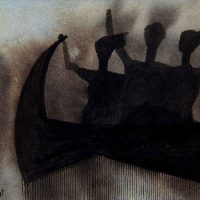
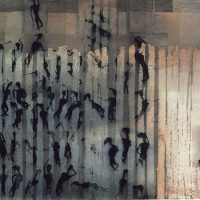
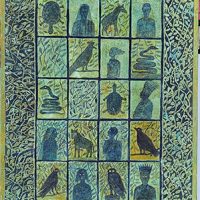
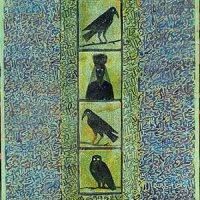
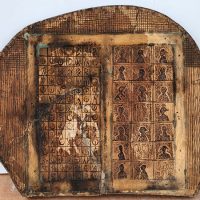
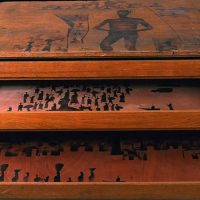
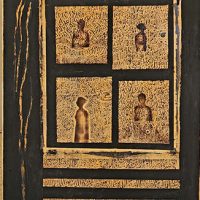
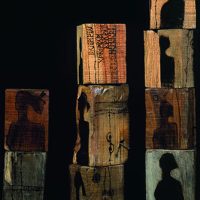
Barakat became known for working with wood surfaces that he burned and etched with fire, creating layered images and symbolic forms. The process allowed him to transform the marks of burning into a powerful visual language suggesting memory, disappearance, and historical traces.
Sliman Mansour — Mud & Straw
Mansour developed works using mud mixed with straw and natural binders, producing surfaces that cracked and aged naturally. The earthy texture evoked the Palestinian landscape and reinforced the movement’s commitment to working with materials drawn from the land.
Nabil Anani — Leather & Natural Pigments
Anani experimented with untreated leather as a painting surface, using pigments made from natural materials such as henna, tea, coffee, and plant dyes. His work emphasized traditional craft practices and organic materials.
Vera Tamari — Clay & Natural Forms
Tamari explored clay, ceramics, and sculptural installations, drawing inspiration from Palestinian landscapes and cultural heritage. Her work expanded the movement’s experimentation with natural materials into three-dimensional forms.
Barakat’s Wood-Burned Works (Pyrography)
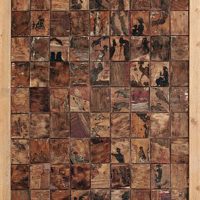
One of the most distinctive directions in Tayseer Barakat’s work to emerge from the New Vision movement is his use of wood surfaces treated with fire, a technique related to pyrography—the practice of creating images through controlled burn marks on wood.
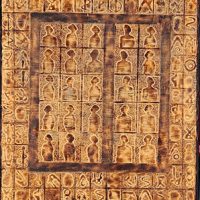
Through this process, Barakat transforms the wood surface into a layered field of marks and textures. The resulting works often evoke the appearance of archaeological fragments or ancient inscriptions, visually linking contemporary experience with the deep historical layers of the region.
Artifact-like Surfaces
By engraving and burning figures of people, animals, and symbolic forms into wood, Barakat creates surfaces that resemble ancient relics or archaeological tablets, suggesting a dialogue between past civilizations and present realities.
Restrained Earth Tones
The works often rely on the natural browns and blacks produced by fire, occasionally complemented by subtle pigments or dyes. This restrained palette creates a contemplative visual atmosphere reflecting the weight of memory and history.
Memory and Reconstruction
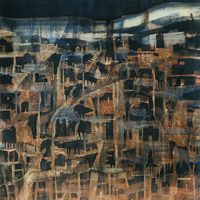
In works such as those presented in Gaza: Recalling the Collage of a Place, Barakat uses these wood-burned techniques to assemble fragmented memories of place, reconstructing visual impressions of landscapes and homes shaped by personal and collective experience.
Through this approach, Barakat transforms wood, fire, and texture into a poetic visual language that connects material experimentation, historical memory, and contemporary Palestinian experience.
Tayseer Barakat’s artistic practice emerges directly from the historical and political realities of Palestine. Born in a refugee camp and living much of his life under Israeli , his work reflects the lived experience of colonization, restricted movement, fragmentation of geography, and cultural perseverance.
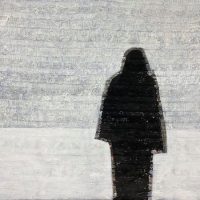
Rather than depicting political events literally, Barakat often conveys these realities through symbolic imagery, layered materials, and textured surfaces that evoke memory, disappearance, and endurance.
Themes such as absence, traces of lost places, cultural memory, and resilience recur throughout his work. Through these visual strategies, Barakat transforms personal and collective Palestinian experience into artistic expressions that resonate globally while remaining rooted in Palestinian history.
- Alexandria Biennale Prize, Alexandria, Egypt (2010)
- Recognition of the New Vision Collective by the A. M. Qattan Foundation (2018)
Tayseer Barakat’s work is widely recognized for its powerful exploration of memory, identity, and cultural resilience. Through his exhibitions, he has brought Palestinian narratives to international audiences, using art as a vital bridge between history, lived experience, and contemporary expression.
Selected Solo Exhibitions
2023 – The Disappeared, Palestinian Museum, Birzeit
2021 – Spiritual Path, Zawyeh Gallery, Dubai
2020 – Shoreless Sea, Zawyeh Gallery, Ramallah
2017 – Lightness of Being, Zawyeh Gallery, Ramallah
2014 – Distant Voices, Zawyeh Gallery, Ramallah
2012 – Al Markhiya Gallery, Doha
2012 – Al Bareh Art Gallery, Bahrain
2011 – Rafia Gallery, Damascus
2010 – Dust Dialogue and Iron, Al Mahata Gallery, Ramallah
2008 – Umm Al-Fahm Art Gallery
2006 – The Name that Became a Number, Al Hallaj Art Centre, Ramallah
2006 – Dar al-Anda Gallery, Amman
2003 – Khalil Sakakini Cultural Centre, Ramallah
2001 – Birzeit University Gallery
1999 – Arts & Crafts Village, Gaza
1996 – Al-Wasiti Art Centre, Jerusalem
1992 / 1994 – Gallery Annadil, Jerusalem
1985 – Al Hakawati Cultural Centre, Jerusalem
1984 – Deer Ghasana, Palestine
Selected Group Exhibitions
2016 – Rendezvous, Zawyeh Gallery, Ramallah
2013 – Asia Africa, Mojo Gallery, Dubai
2012 – Three Artists, Meem Gallery, Dubai
2010 – Alexandria International Biennial, Egypt
2005 – UNESCO Headquarters Exhibition, Paris
2003 – Made in Palestine, Station Museum of Contemporary Art, Houston
2000 – Sharjah International Biennial, UAE
1996 – Spring of Palestine, Institut du Monde Arabe, Paris
1996 – United Nations Headquarters Exhibition, New York
1993 – Moderna Museet Exhibition, Stockholm
1990 – Palestinian Artists Exhibition, Spanish Parliament, Madrid
1989 – South of the World, Rome
Collections
British Museum – London
Guggenheim Abu Dhabi Collection
Mathaf: Arab Museum of Modern Art – Doha
Jordan National Gallery of Fine Arts – Amman
Barjeel Art Foundation – Sharjah
Dalloul Art Foundation – Beirut
Darat Al Funun – Amman
Institut du Monde Arabe – Paris
Umm al-Fahm Art Gallery
A.M. Qattan Foundation – Palestine
Bank of Palestine Art Collection
Birzeit University Art Collection
Palestinian Museum Digital Archive
Tayseer Barakat’s work has been documented in numerous exhibition catalogues and publications on Palestinian contemporary art, including:
- The Disappeared, Palestinian Museum Exhibition Catalogue
- Made in Palestine, Station Museum of Contemporary Art Exhibition Catalogue
- Sharjah Biennial Catalogues
- Publications by Zawyeh Gallery
- Studies and essays on the New Vision movement in Palestinian art
Tayseer Barakat’s legacy extends beyond his individual artistic achievements. Over more than four decades, he has contributed significantly to the intellectual and cultural development of Palestinian contemporary art.
As an artist, educator, and cultural contributor, Barakat has helped nurture new artistic voices and participated in shaping the artistic landscape of Palestine.
His work stands as a visual archive of Palestinian memory—connecting personal experience, historical narrative, and artistic experimentation. Through his continued exploration of materials and form, Barakat has contributed to the international recognition of Palestinian art while remaining deeply rooted in the cultural and historical realities of his homeland.
“Art is not merely an image on a wall, but the memory of a people resisting oblivion, opening the door of hope for generations yet unborn.”
“When we paint our land and the faces of its people, we do not merely document the past; rather, we give the future a reason to believe that this land remains alive.”
“My message to future generations: Carry your stories within art, for one day, colors may become stronger than the walls that attempt to conceal them.”